Showing posts with label Novel. Show all posts

Wednesday, January 28, 2009

Like the Flowing River by Paulo Coelho (Part 6)

A boy was watching his grandmother write a letter. At one point, he asked:
"Are you writing a story about what we've done? Is it a story about me?"

His grandmother stopped writing her letter and said to her grandson:
"I am writing about you, actually, but more important than the words is the pencil I'm using. I hope you will be like this pencil when you grow up."

Intrigued, the boy looked at the pencil. It didn't seem very special.
"But it's just like any other pencil I've ever seen."

"That depends on how you look at things. It has five qualities which, if you manage to hang on to them, will make you a person who is always at peace with the world.

"First Quality: you are capable of great things, but you must never forget that there is a hand guiding your steps. We call that hand God, and He always guides us according to His will.

"Second Quality: now and then, I have to stop writing and use a sharpener. That makes the pencil suffer a little, but afterwards, he's much sharper. So you, too, must learn to bear certain pains and sorrows, because they will make you a better person.

"Third Quality: the pencil always allows us to use an eraser to rub out any mistakes. This means that correcting something we did is not necessarily a bad thing; it helps to keep us on the road to justice.

"Fourth Quality: what really matters in a pencil is not its wooden exterior, but the graphite inside. So always pay attention to what is happening inside you.

"Finally, the pencil's Fifth Quality: it always leaves a mark. In just the same way, you should know that everything you do in life will leave a mark, so try to be conscious of that in your every action."

Source:
Paulo Coelho
Like The Flowing River (page 10-11)
2006
HarperCollinsPublishers, London

****
Review:

This is a fantastic book by Paulo Coelho. I recommend those who loves philosophy and humanity to spent time reading this book.

Like The Flowing River is an intimate collection of Paulo Coelho's reflection and short stories. The stories relates to the philosophy of life, our destiny and choices, of love and his thoughts and reflections that explores the journey of life in search of its true meanings.

Other good books from Paulo Coelho are: The Alchemist, The Pilgrimage, Eleven Minutes and The Zahir. Some of the other books that did not interest me are: The Fifth Mountain, Veronika Decides to Die, The Devil and Miss Prym, Manual of the Warrior of Light, By the River Piedra I Sat Down and Wept and Valkyries.

I have yet to read "The Witch of Portobello" which I bought on 14th September 2007. I will finish it by this week.

***

The Monk Who Sold His Ferrari by Robin S. Sharma

Peter was a very lively little boy. Everyone loved him: his family, his teachers and his friends. But he did have one weakness. Peter could never live in the moment. He had not learned to enjoy the process of life.

When he was in school, he dreamed of being outside playing. When he was outside playing he dreamed of his summer vacation.

Peter constantly daydreamed, never taking the time to savor the special moments that filled his days.

One morning, Peter was out walking in a forest near his home. Feeling tired, he decided to rest on a patch of grass and eventually dozed off. After only a few minutes of deep sleep, he heard someone calling his name. 'Peter! Peter!' came the shrill voices from above. As he slowly opened his eyes, he was startled to see a striking woman standing above him. She must have been over a hundred years old and her snow-white hair dangled well below her shoulders like a matted blanket of wool. In this woman's wrinkled hand was a magical little ball with a hole in the centre and out of the hole dangled a long, golden thread.

'Peter,' she said, 'this is the thread of your life. If you pull the thread just a bit, an hour will pass in seconds. If you pull a little harder, whole days will pass in minutes. And if you pull with all your might, months - even years - will pass by in days.'

Peter grew very excited at this discovery. 'I'd like to have it if I may?'

The elderly woman reached down and gave the ball with the magic thread to Peter.

The next day, Peter was sitting in the classroom feeling restless and bored. Suddenly, he remembered his new toy. As he pulled a little bit of the golden thread, he quickly found himself at home, playing in his garden. Realizing the power of the magic thread, Peter soon grew tired of being a schoolboy and longed to be a teenager, with all the excitement that phrase of life would bring. So, he pulled out the ball and pulled hard on the golden thread.

Suddenly he was a teenager with a very pretty young girlfriend name Elise. But Peter still wasn't content. He had never learned to enjoy the moment and to explore the simple wonders of every stage of life. Instead, he dreamed of being an adult. So again he pulled on the thread and many years whizzed by in an instant. Now he found that he had been transformed into a middle-aged adult.

Elise was now his wife and Peter was surrounded with a houseful of kids. But Peter also noticed something else. His once jet black hair had started to turn grey. And his once youthful mother whom he loved so dearly had grown old and frail.

Yet Peter still could not live in the moment. He had never learned to "live in the now." So, once again, he pulled on the magic thread and waited for the changes to appear.

Peter now found that he was a seventy-year-old man. His thick dark hair had turned white as snow and his beautiful young wife Elise had also grown old. His wonderful children had grown up and left home to lead lives of their own.

For the first time in his entire life, Peter realized that he had not taken the time to embrace the wonders of living. He had never gone fishing with his kids or taken a moonlight stroll with Elise. He had never planted a garden or read those wonderful books his mother had love to read. Instead he had hurried through life, never resting to see all that was good along the way.

Peter became very sad at this discovery. He decided to go out to the forest to look for the old woman who had given him the ball and the magic thread. But she was nowhere to be found.

"My whole life has passed before my eyes without giving me the chance to enjoy it. Sure, there would have been sad times as well as great times but I haven't had the chance to experience either. I had missed the gift of living."

Peter decides to "live in the now" from now onwards. He will now take whatever time is left tn this world to embrace the wonders of living.

****************************************************
Adapted from:
Robin S. Sharma's The Monk Who Sold His Ferrari
HarperCollinsPublishers
1997

*****************************************************

Like the Flowing River by Paulo Coelho (Part 5)

A missionary who, as soon as he arrived in Marrakesh (in Morocco), decided that he would go for a walk every morning in the desert that lay just outside the city.

The first time he did this, he noticed a Arab lying down, with his ear pressed to the ground and stroking the sand with one hand.

'He's obviously mad,' the missionary said to himself.

But the scene was repeated every day, and after a month, intrigued by this strange behavior, he decided to speak to the stranger. With great difficulty, since he was not yet fluent in Arabic, he knelt down by his side, "What are you doing?"

"I'm keeping the desert company and offering it consolation for its loneliness and its tears."

"I didn't know the desert was capable of tears."

"It weeps every day because it dreams of being useful to people, and of being transformed into a vast garden where they could grow cereal crops and flowers and graze sheep."

"Well, tell the desert that it is performing an important duty," said the missionary. "Whenever I walk in the desert, I understand man's true size, because we are compared with God. When I look at its sands, I imagine all the millions of people in the world who were born equal, even if the world has not always been fair to all of them. Its mountains helps me to meditate, and when I see the sun coming up over the horizon, my soul fills with joy and I feel closer to the Creator."

The missionary left the man and returned to his daily tasks. Imagine his surprise when, next morning, he found the man in the same place and in the same position.

"Did you tell the desert everything that I said?"

The man nodded.

"And it's still weeping?"

"I can hear every sob. Now it's weeping because it has spent thousands of years thinking that it was completely useless and wasted all the time blaspheming against God and its own fate."

"Well, tell the desert that even though we human beings have a much shorter lifespan, we also spend much of our time thinking we're useless. We rarely discover our true destiny, and feel that God has been unjust to us. When the moment finally comes, and something happens that reveals to us the reason we were born, we think it's too late to change our life and continue to suffer, and, like the desert, blame ourselves for the time we have wasted,"

"I don't know if the desert will hear that," said the man. "He's accustomed to pain, and can't see things any other way."

"Let's do what I always do when I sense that people have lost all hope. Let is pray."

The two men knelt and prayed. One turned towards Mecca because he was a Muslim, and the other put his hands together in prayer because he was a Catholic. They each prayed to their own God, who has always been the same God, even though people insist on calling him by different names.

The following day, when the missionary went for his usual morning walk, the man was no longer there. In the place where he used to embrace the earth, the sand seemed wet, for a small spring has started bubbling up there.

In the months that followed, the spring grew, and the inhabitants of the city built a well there.

The Bedouin call the place "The Well of the Desert's Tears".

They say that anyone who drinks from its water will find a way of transforming the reason for his suffering into the reason for his joy, and will end up finding his true destiny.

***********************************************************************

Extracted from the book, "Like The Flowing River" by Paulo Coelho.

***********************************************************************

Like the Flowing River by Paulo Coelho (Part 4)

The more we plan our steps, the more chance there is that we will go wrong, because we are failing to take into consideration four things:

1) Other people (2) Life's teaching (3) Passion, and (4) Calm.

The more we feel we are in control of things, the farther off we are from controlling anything. A threat does not issue any warning, and a swift reaction cannot be planned like a Sunday afternoon walk.

Do not allow your supposed experience of life to transform you into a machine.

Often what we call experience is merely the sum of our defeats. Thus we look ahead with the fear of someone who has already made a lot of mistakes in life and we lack the courage to take the next step.

*************************************************************************************
Extracted from Paulo Coelho's book, "Like the Flowing River

*************************************************************************************

Like the Flowing River by Paulo Coelho (Part 3)

A wise man moved to the city of Akbar. No one took much notice of him, and his teachings were not taken up by the populace. After a time, he became the object of their mockery and their ironic comments.

One day, while he was walking down the main street in Akbar, a group of men and women began insulting him. Instead of pretending that he had not noticed, the wise man turned to them and blessed them.

One of the men said:

"Are you deaf too? We call you the foulest of names and yet you respond with sweet words!"

"We can each of us only offer what we have," came the wise man's reply.

**********************************************************************************

I have a lot to learn from this wise man. I will pray for courage and strength to apply this lesson in my life.

**********************************************************************************

Story extracted from Paulo Coelho's book, Like the Flowing River

**********************************************************************************

Like the Flowing River by Paulo Coelho (Part 2)

The Story of the prince of Thing-Zda

Around 250 BC, a certain handsome prince of the region of Thing-Zda was about to be crowned emperor; however, according to the law, he must first had to get married.

Since this meant choosing the future empress, the prince needed to find a young woman whom he could trust absolutely. On the advice of a wise man, he decided to summon all the young women of the region in order to find the most worthy candidate.

An old lady, who served as a servant in the palace for many years, heard about the preparations for this gathering and felt very sad, for her daughter nurtured a secret love for this prince.

When the old lady got home, she told her daughter and was horrified to learn that she intended going to the palace.

The old lady was desperate.

"But, daughter, what on earth will you do there? All the richest and most beautiful girls from the court will be present. It's a ridiculous idea! I know you must be suffering, but don't turn that suffering into madness.

And the daughter replied:

"My dear mother, I am not suffering and I certainly haven't gone mad. I know that I won't be chosen, but it's my only chance to spend at least a few moments close to the prince, and that makes me happy, even though I know that a quite different fate awaits me."

**********************************************************************************
Second Chance: The story of Antonio

I was walking along the Gran Via when I saw a woman - petite, light-skinned, and well-dressed - begging money from passers-by. As I approached, she asked me for a few coins with which to buy a sandwich. I was used to beggars wearing very old, dirty clothes, and so I decided not to give her anything and walked on. The look she gave me, however, left me with a strange feeling.

I went to my hotel and suddenly felt an incomprehensible urge to go back and give her some money - I was on holiday, I had just had lunch, I had money in my pocket, and it must be terribly humiliating to have to beg in the street and to be stared at by everyone.

I went back to the place where I had seen her. She was no longer there; I searched the nearby streets, but could find no trace of her. the following day, I repeated this pilgrimage, again and again.

From that day on, I slept only fitfully. I returned to my country and told a friend about my experience. She said that I had failed tomake some very important connection and advised me to ask for God's help. I prayed, and seemed to hear a voice saying that I needed to find the beggar again. I kept waking up in the night sobbing. I realized that I could not go on like this, and so I scraped together enough money to buy a ticket back to Madrid in order to look for the beggar.

I began a seemingly endless search, to which I devoted myself entirely.

I had been back to Spain several times since, and I know that I will never meet the beggar again; but I did what my heart demanded.

************************************************************************************
Lessons Learned:

We may not get what we wanted but we are in control of what we can do, and the outcome is not for us to decide. If we had one chance, whatever the outcome it may be or what we may presumed, let's not lose that one chance, for we may not have another.

***********************************************************************************
Adapted from Paulo Coelho's story in his book, Like the Flowing River

**********************************************************************************

Like the Flowing River by Paulo Coelho (Part 1)

This was the conversation between a monk and Isabella.

Monk: "Did you know that bananas can teach you the meaning of life?"

The monk then took out a rotten banana from his bag and threw it away.

Monk: "That is the life that has been and gone, and which was not used to the full and for which it is now too late."

Then he drew another banana, which was still green.

Monk: "This is the life that has yet to happen, and for which we need to wait until the time is right."

Finally, he took out a ripe banana, peeled it, and shared it with Isabella.

Monk: "This is the present moment. learn how to gobble it up without fear or guilt."

************************************************************************

Extracted from Paulo Coelho's book, Like the Flowing River

************************************************************************

The Witch of Portobello by Paulo Coelho

No one lights a lamp in order to hide it behind the door;

No one sacrifices the most important thing she possesses: Love;

No one places her dreams in the hands of those who might destroy them.

No one, that is, but Athena!

*******************************************************************

"If a man we don't know phones us up one day and talks a little, makes no suggestions, says nothing special, but nevertheless pays us the kind of attention we rarely receive, we're quite capable of going to bed with him that same night, feeling relatively in Love. That's what women are like, and there's nothing wrong with that - it's the nature of thje female to open herself to love easily."

--- Deidre O'Neill, doctor.

************************************************************************************

"... my heart struggled vainly not to allow itself to be seduced by a woman who don't belong to my world.

"I applauded when reason lost the battle, and all I could do was surrender and accept that I was in Love. That love led me to see things I'd never imagined could exist - rituals, materialization, trances. Believing that I was blinded by Love, I doubted everything, but doubt, far from paralyzing me, pushed me in the direction of oceans whose very existence I couldn't admit.

"I'm finally coming to accept that I was only a temporary inhabitant, there as a favor, like someone who finds himself in a beautiful mansion, eating exquisite food, aware that this is only a party, that the mansion belongs to someone else, that the food was bought by someone else, and that the time will come when the lights will go out, the owners will go to bed, the servants will return to their quarters, the door will close, and he'll be out in the street again, waiting for a taxi or a bus to restore him to the mediocrity of his everyday life.

"I'm going back, or rather, part of me is going back to the world where only what we can see, touch and explain makes sense.

"I also know that, at night, another part of me will remain wandering in space, in contact with things as real as ..."

---Heron Ryan, journalist

************************************************************************************

The above are just a few lines from the book "The Witch of Portobello", another great story book written by Paulo Coelho, and it is the kind of book that will transform the way readers think about Love, passion, joy and sacrifice.

The Witch of Portobello is a story of a girl by the name of Sherine Khalil who later changed her name to Athena, a mysterious young woman born in Romania, raised in Beirut and living in London. Her life is told by many who knew her well, or hardly at all.

For those reading enthusiasts who prefers to read a story that is structured from a beginning and expecting the last chapter to be the conclusive ending of a tale, then you would be disappointed, as the book is structured in which each chapter consists of a testimony or statements related by an individual who knew Athena, telling their personal experiences and knowledge of Athena.

My Rating: I prefer Coelho's Like the Flowing River, The Alchemist and The Pilgrimage. This book is somewhat similar in styles with Coelho's Eleven Minutes and Veronika Decides to Die.


Eleven Minutes by Paulo Coelho

Once upon a time, there was a bird. He was adorned with perfect wings and with glossy, colorful feathers. He was a creature made to fly about freely in the sky, bringing joy to everyone who saw him.

One day, a woman saw this bird and fell in love with him. She watched his flight, her mouth wide in amazement, her heart pounding, her eyes shining with excitement. She invited the bird to fly with her, and the two traveled across the sky in perfect harmony. She admired and venerated and celebrated that bird.

But then she thought: He might want to visit far-off mountains! And she was afraid that she would never feel the same way about the other bird. And she felt envy, envy for the bird's ability to fly.

And she felt alone.

And her thought: "I'm going top set a trap. The next time the bird appears, he will never leave again."

The bird, who was also in love, returned the following day, fell into the trap and was put in a cage.

She looked at the bird every day. There he was, the object of her passion, and she showed him to her friends, who said: "Now you have everything you could possibly want."

However, a strange transformation began to take place; now that she had the bird and no longer needed to woo him, she began to lose interest.

The bird, unable to fly and express the true meaning of his life, began to waste away and his feathers began to lose their gloss; he grew ugly; and the woman no longer paid any attention, except by feeding him and cleaning out his cage.

One day, the bird died. The woman felt terribly sad and spent all her time thinking about him. But she did not remember the cage, she thought only of the day when she had seen him for the first time, flying contently amongst the clouds.

If she had looked more deeply into herself, she would have realized that what had trilled her about the bird was his freedom, the energy of his wings in motion, not his physical body.

Without the bird, her life too lost all meaning, and Death came knocking at her door. "Why have you come?" she asked Death. "So that you can fly once more with him across the sky," Death replied.

"If you had allowed him to come and go, you would have loved and admired him even more; alas, you now need me in order to find him again."


************************************************************************************

The above are Extracted from the book:
Eleven Minutes
(p215-217)

by Paulo Coelho.

Eleven Minutes tells a story of a young girl who falls in love at the age of eleven and discovered that sex actually only takes eleven minutes.

In her odyssey of self-discovery, the girl has to choose between pursuing a part of darkness, sexual pleasure for its own sake, or risking everything to find her own 'inner light' and the possibility of sacred sex, sex in the context of love.

In this gripping and daring novel, Coelho sensitively explores the sacred nature of sex and love.
*************************************************************************************
Notable notes:

It is not time that changes man, nor knowledge; the only thing that can change someone's mind is love.

Perhaps love really could transform someone, but despair did the job more quickly.

In the search for happiness, however, we are all equal; none of us are happy.

"I have discovered the reason why a man pays for a woman; he wants to be happy."

Everyone needs to earn money, but not everyone chooses to live on the margins of society.

More Experience, Earn Less: Prostitution isn't like other businesses: Beginners earn more and more experienced earn less. Prices went down as the woman's age went up.

Customer Satisfaction / Quality Management: "When your client comes, you must always groan as if you were having an orgasm too. That guarantees customer loyalty." Buy Why? "They're paying for their own satisfaction." "A man doesn't prove he's a man until he is made to believed that he can pleasure a woman. And if he can pleasure a prostitute, he'll think he's the best lover on the block; and he will start to admire his dick."

Men are very strange: They can beat you up, shout at you, threaten you, and yet, they are scared to death of women really. Perhaps not the woman they married, but there's always one woman who frightens them and forces them to submit to her caprices.

Men are very strange: It was the woman who would have felt ashamed for being unable to arouse them, but, no, they always blame themselves. Perhaps not the woman they married, but always one woman who frightens them and forces them to submit to her caprices.

For a night? Now come on, you're exaggerating. It's really only 45 minutes, and if you allow time for taking off clothes, making some phoney gestures of affection, having a bit of banal conversation and getting dressed again, the amount of time spent actually having sex is about Eleven Minutes."

Eleven Minutes! The world revolved around something that only too Eleven Minutes. When the moment came to go to bed with someone, Eleven Minutes later it was all over.

Civilization: Something was very wrong with civilization, and it wasn't the destruction of the Amazon, rainforest or the ozone layer, the death of the panda, cigarettes or prison conditions, as the newspapers would have it. It is precisely that thing: sex.

Men and women may withstand a week without water, two weeks without food, many years of homelessness, but not loneliness.

Freedom only exists when love is present. The person who gives him or herself wholly, the person who feels freest, is the person who loves most wholeheartedly.

You can't mend a broken heart?: In love, no one can harm anyone else; we are each of us responsible for our own feelings and cannot blame someone else for what we feel.

How can you mend a broken heart? In love, no one can harm anyone else; but I'm not sure when that love is lost thereafter.

Ownership & Possession: I am convinced that no one can loses anyone, because no one owns anyone.; no one possesses anyone else. Anyone who has lost something they thought was theirs forever will finally come to realize that nothing really belongs to them.

Beauty is Money: So many pretty girls let themselves be seduced by the illusion of easy money, forgetting that, one day, they'll be old and will have missed out on meeting the love of their life. Beauty is like the wind; beauty, my dear, don't last.

Heart or Body or Both: Those who touched my heart failed to arouse my body, and those who aroused my body failed to touch my heart.

Don't Play-Play: When it comes to seduction, feelings and contracts, one should never play around.

Wisdom: "My dear, it's better to be unhappy with a rich man than happy with a poor man, and over there you'll have far more chances of becoming an unhappy rich woman."

Love is tangible and measurable: "I didn't love your father at first, but money buys everything, even true love."

Exit Strategy: No one knows what life is in store for us, and it's always good to know where the emergency exit is.

Women wants three things in life: adventure, money and a husband.

I can choose either to be a victim of the world or an adventurer in search of pleasure and treasure. It's all a question of how I view my life.

Being young inevitably means making mistakes; that's what all drug addicts says too.

Profound desire, true desire is the desire to be close to someone. From that point onwards, things change ... and what happens before - the attraction that brought them together - is impossible to explain and sustain.

Don't think how to do; Just do it: Not everything in life is a matter of what position you adopt when making love, and that any variation usually occurs naturally, without thinking, like the steps in a dance.

Wisdom of a woman: "I allowed myself to fall in love for a simple reason: I'm not expecting anything to come from it."

Love or make? "Everyone knows how to love; but not everyone understands how to make love; the majority of us have to re-learn because there is a connecting thread. Our bodies must learn to speak the language of the soul, known as sex, and that is what a woman can give to the man who gave her back her soul, even though he has no idea how important he is to her life. That is what he asked for, and that is what she would give."

No one can know how to humiliate another person if they themselves have not experience humiliation.

Wise man says: Human beings weren't made solely to go in search of wisdom, but also to plough the land, wait for rain, plant the wheat, harvest the grain, make the bread, and have sex.

Witholding the object of desire: Real love has nothing to do with imagination. We will discover it when a chain of events provoked by the energy engendered by love - courtship, engagement, marriage, children, waiting, more waiting, getting old, retirement, illnesses, the feelings that it is far too late. Sexual energy comes into play before sex even takes place. The greatest pleasure isn't sex, but the excitement of the thoughts of it. And then you awaken desire by not immediately handing over the object of that desire.

*************************************************************************************

N/B: Not everything quoted above are absolutely Coelhos'; there're quite some other Paulos around.

N/B: Not me!
*************************************************************************************

Sunday, October 14, 2007

Shooting an Elephant & Other Essays

Today is a rest day for me. So, I tried to catch up with some readings as the pile of books I bought recently are catching dusts and mites.

Since I do not want to have any serious readings, I got hold of this book by George Orwell, "Shooting an Elephant and Other Essays."

It wasn't exactly an outstanding book, but I like to borrow the term he used: "Good Bad Book", that is, the kind of book that has no literary pretensions but which remains readable when more serious productions have perished.

It was, to me, an escape literature where my mind browse at odd chapters. I like what Eric Arthur Blair (George Orwell his pen name) said: "While civilization remains such that one needs distraction from time to time, 'light' literature has its appointed place." This book is, for me, one of them.

There was one chapter that strikes me much: "Books v Cigarettes." Here, Eric reveals his estimates of how much money he spent on books. The hypothesis is that 'buying books is an expensive hobby and beyond the reach of average person which deserves some detailed examination.

Exactly what reading costs, reckoned in terms of dollars and cents per day, is difficult to estimate. According to Eric, he probably possess some 900 books (collected over a period of 15 years) which was estimated to have cost him some £166. Including other costs, the average expenses per year is £25 which is equivalent to about 83 cigarettes. Eric concluded that, "he is spending far more on tobacco than he did on books."

I am a smoker and I love buying books, regularly. But it never cross my mind to make a direct cost comparative study on this two hobbies. I think, I should and I too love to do so now.

As for me, I spent an average of about RM9,000 a year on books from the period 1997-2004. In the last 3 years, the average had gone down to about RM6,000 per annum. Let me just use RM6,000 as a baseline for tabulation. That works out to be about RM500 a month, RM17 a day which is equivalent to 2 packets of 20-stick cigarettes.

Oh, I didn't smoke 2-packets a day, but not too far off. But the likelihood that I will be scaling down on my cost of books procurement would sooner match the cost - cost of cigarette consumption = cost of books procurement.

How much is your cost of cigarette v books, or liquor v books, or cosmetics v books, or clothings v books? This looks like a good assessment of our expenditure vs knowledge acquisition.

Sunday, July 03, 2005

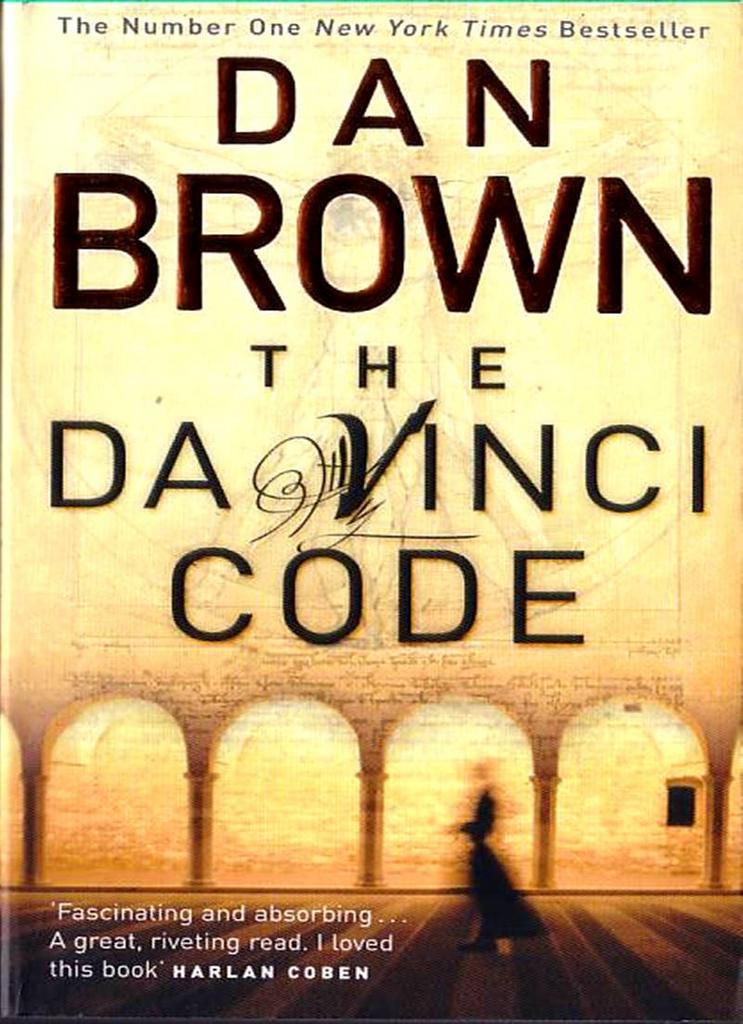
Da Vinci Code by Dan Brown


The Da Vinci Code

Author: Dan Brown

Publisher: Bantam Press; 2003

Price: RM34.90


Dan Brown's latest thriller is an exhaustively researched about secret religious societies and vengeance. The action kicks off in Paris with the murder of the Louvre's chief curator, whose body is found laid out in symbolic repose at the foot of the Mona Lisa.


The book concerns the attempts of the protagonist, Robert Langdon who is the Professor of Religious Symbology at Harvard University, to solve the murder of renowned curator Jacques Saunière. Saunière's body is found inside the Louvre naked and posed like Leonardo da Vinci's famous drawing, the Vitruvian Man, with a cryptic message written beside his body and a Pentacle drawn on his stomach in his own blood. The interpretation of hidden messages inside Da Vinci's famous works, including the Mona Lisa and The Last Supper, figure prominently in the solution to the mystery.

The main conflict in the novel revolves around the solution to two mysteries:

• What secret was Saunière protecting that led to his murder?
• Who is the mastermind behind his murder?

Jacques Saunière was the head of the Priory of Sion and therefore possessed the knowledge of the "keystone", which in turn reveals the location of the Holy Grail, as well as documents which would shake the foundation of Christianity and the Church. He was killed in order to extract this information from him and eliminate the members of the Priory of Sion.


The message Saunière wrote on the floor before dying contained the extra line "P.S. Find Robert Langdon". As such, the police therefore suspected Professor Langdon to be the murderer. Sophie Neveu a reknown cryptographer and the granddaughter of Saunière saw the entire text of the message by accident when it was faxed to her office by the police. Sophie realized immediately that the message was meant for her, since her grandfather used to call her "Princesse Sophie" (i.e. "P.S.") when she was a girl. She informs Langdon of this secretly when they are in the Louvre.

The other three lines of Saunière's blood message are anagrams. The first line are the digits of the Fibonacci sequence out of order. The second and third lines ("O, draconian devil!" and "Oh, lame saint!") are anagrams respectively for "Leonardo da Vinci" and "The Mona Lisa" (in English). These clues were meant to lead to a second set of clues. On the glass over the Mona Lisa, Saunière wrote the message "So dark the con of Man" with a curator's pen that can only be read in black light. The second clue is an anagram for Madonna of the Rocks, another Da Vinci painting hanging nearby. Behind this painting, Saunière hid a key. On the key, written with the curator's pen, is an address.

Both Langdon and Sophie Neveu, become both suspects and detectives searching for not only Neveu's grandfather's murderer but also the stunning secret of the ages he was charged to protect. The mystery leads Neveu and Langdon on a breathless flight through France, England, and history itself. It also reveal about the secret of the Knights Templar, the symbolism in many of the world's most treasured paintings, as well as architectural symbolism in some of history's most sacred churches.

The unraveling of the mystery requires the solution to a series of brain-teasers, including anagrams and number puzzles. The solution itself is found to be intimately connected with the possible location of the Holy Grail and to a mysterious society called the Priory of Sion, as well as to the Knights Templar. The Catholic organization Opus Dei also figures prominently in the plot.

While the novel claims to contain elements of historical truth within its fictional framework, the book has attracted a large amount of criticism, including at least ten other books written to debunk its various claims. The book claims that the Roman Catholic Church has been involved in a conspiracy to cover up the true story of Jesus. The novel has also received a great deal of complaint regarding Brown's clichéd style and improbable storyline.
The book is full of fables and is only interesting for those who love conspiracy theories. Good reading materials.

Wednesday, June 29, 2005

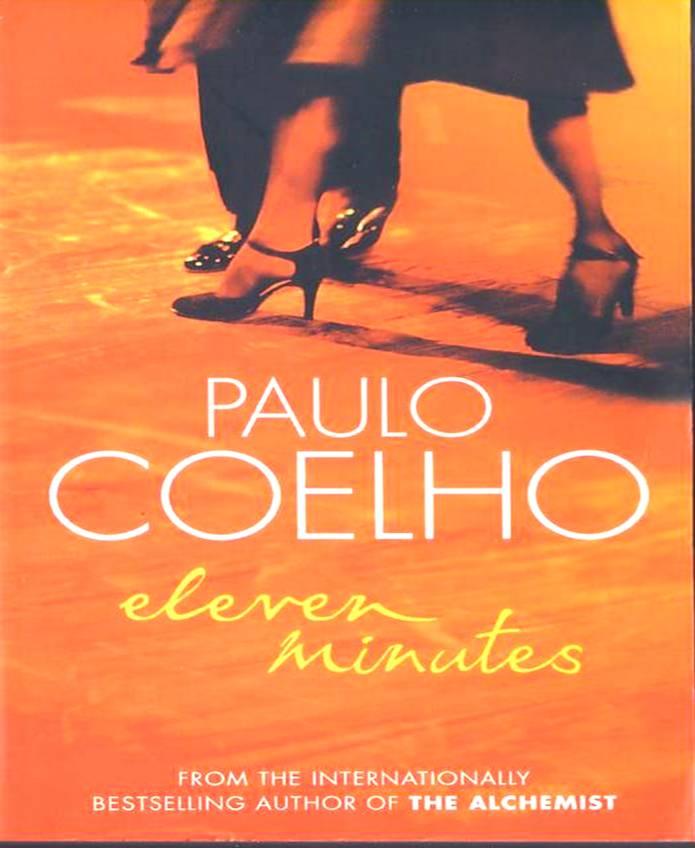
Eleven Minutes by Paulo Coelho

Eleven Minutes

by Paulo Coelho

HarperCollins Publishers; 2003

Price: RM49.90
Local distributor: MPH


"On 29th May 2002, just hours before I put the finishing touches to this book, I visited the Grotto in Lourdes, in France, to fill up a few bottles with miraculous water from the spring. Inside the Basilica, a gentleman in his seventies said to me: 'You know, you look like Paulo Coelho.' I said that I was Paulo Coelho. The man embraced me and introduced me to his wife and grand-daughter. He spoke of the importance of my books in his life, concluding: 'They make me dream.'"

Those are the words from Paulo Coelho in the preface of 'Eleven Minutes', the life-enhancing book that have cause great impact to millions of readers.

'Eleven Minutes' tells a story of Maria, a young girl from a Brazilian village whose first innocent brushes with love leave her heart-broken. At a tender age, she becomes convinced that she will never find true love, instead believing that 'love is a terrible thing that make you suffer...'

That set the stage of her journey to discover love, fame and fortune which leads her into the world of prostitution. Maria drifts further and further away from love while at the same time developing a fascination with sex.

Eventually, Maria meets a handsome young painter and she has to consider which way she wants her life to be, that is, either to continue to pursue a path of darkness and sexual pleasures, or to risk everything to find her own inner self and the possibility of sex in the context of love.

In this novel, Paulo Coelho explores the sacred nature of sex and love and prejudices.

I began fascinated with Paulo's writing after reading his book, 'The Alchemist'. I used to dislike novels about fictional romance and have always prefered management books. My friend Mohd Adib drag me into the world of Paulo Coelho when he persuaded me to try read The Alchemist. To nurse my curiosity, I pick up that book and drag myself to read it. Thereafter, I have never turn back on any Paulo's book. I was totally intrigued by the beauty of Paulo's writing and no words can describe this discovery of profound knowledge.

The Alchemist established Paulo's worldwide fame. The book has already achieved the status of a modern classic, universally admired. Considered a timeless story, it will enchant and inspire a whole new readers from generations to come.

'Eleven Minutes', was no.1 in the 2003 annual list of Publishing Trends, which every year establishes which fiction works sell more copies worldwide.


Coelho was born in 1947 in Rio de Janeiro. He grew up in a deeply religious household and was educated by Jesuits. Paulo Coelho has led an extreme rebellious during his youth.

Paulo was determined to be a writer from his early years. When Coelho was 17, his parent sent him to an asylum because they thought he was psychotic. "My parent thought I was psychotic because I read a lot. I was very shy and I didn't socialise very easily. My parent were desperate. They didn't want to hurt me, but they didn't know what to do," Paulo relates.

Coelho escaped from the asylum three times and was eventually released in 1967. He then enrolled in Law School, only to drop out to become a hippy. He also wrote popular song lyrics for some of Brazil's famous pop music stars, including Elis Regina and Raul Seixas. Shortly after, he worked as a journalist.

Then, in 1974, Coelho was arrested for 'subversive' activities by the authorities (the authorities saw Coelho's lyrics as leftwing and dangerous).

In 1986 Paulo Coelho walked the Road to Santiago, a medieval pilgrim's route between France and Spain. He would later describe this experience in his book, The Pilgrimage, published in 1987. The following year, his second book The Alchemist established his worldwide fame.

Paulo Coelho have the Guinness World Record for most translations (53) of a single title (The Alchemist) signed in one sitting (45 minutes). The record has been attained as a result of an international book signing hold at the Frankfurt Book Fair (2003).

Coelho's books tend to feature some sort of spiritual quest.

In his words: "I write from my soul. This is the reason that critics don't hurt me, because it is me. If it was not me, if I was pretending to be someone else, then this could unbalance my world, but I know who I am."

"Many people love my work, some hate it, but I've never stopped to think about it, and I'll go on without giving a thought - what really matters to me is to know that I can share my soul with those who understand me."

"I'm a human being, in its full condition, with its positive and negative sides. But I keep my ethics and when I break it, I'm not ashamed to apologize. I think that people waste a lot of time trying to improve themselves - and they do it by following other people's patterns. What's the meaning of being better? In my opinion, it is the constant daily struggle in search of my own dream. Man improves himself as he follows his path; if he stands still, waiting to improve before he makes a decision, he'll never move."


Paulo Coelho Posted by Hello


Other titles by Coelho include Brida (1990), The Valkyries (1992), Maktub (1994) - a compilation of his daily columns, By The River Piedra I Sat Down and Wept (1994), The Fifth Mountain (1996), The Manual of the Warrior of Light (1997), Veronika Decides to Die (1998) and The Devil and Miss Prym (2000).

Coelho’s latest novel 'O Zahir' reaches the Brazilian bookstores on April 2nd 2005. It is already the number one in the bestseller lists of all 83 countries in which it has been released; the only exception is in Germany, where it is number two, behind Da Vinci Code (another great novel). O Zahir was published in 83 countries and in 42 languages throughout the globe.

Paulo Coelho's enchanting novel has inspired millions of delighted readers around the world. His story is told in dazzling simplicity and wisdom. His writings is a must read! For those who have not yet read any of his bestsellers, you should start reading his first charting novel - The Pilgrimage and The Alchemist. Eleven Minutes is also a must read.

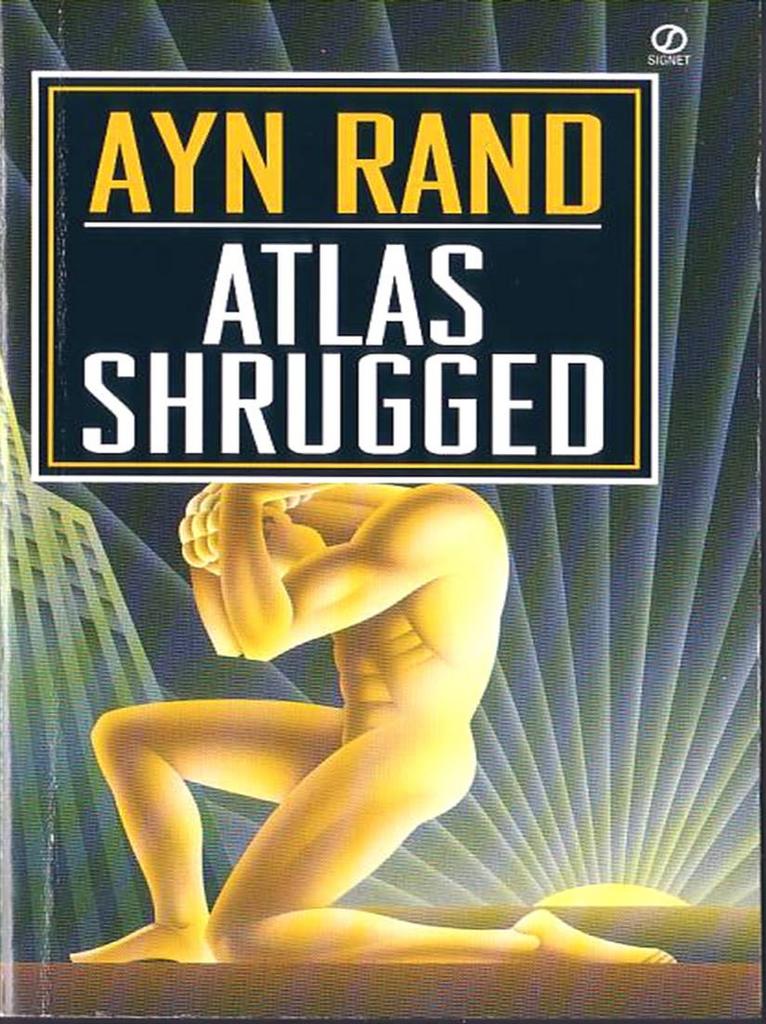
Atlas Shrugged by Ayn Rand

Atlas Shrugged

by Ayn Rand

A Signet Book; 1957

Price: RM 37.95

MPH


"I swear by my life and my love of it that I will never live for the sake of another man, nor ask another man to live for mine."

— John Galt, Atlas Shrugged

Atlas Shrugged is Ayn Rand's magnum opus and It is her most philosophical novel.

When it was published in 1957, Atlas Shrugged created great controversy because of Ayn Rand’s uncompromising defense of capitalism and the state of the mind of individual. Denounced by many critics and intellectuals, the book nevertheless reaches world wide audiences. The book sold millions of copies and have tremendously influenced the lives of countless readers. Since 1957, Ayn Rand’s philosophy of Objectivism has gradually taken hold in the civil society. Today, her books and ideas are becoming widely taught in colleges and universities in Europe and America.

Atlas Shrugged is a mystery story which pondered on why so many of the world's productive minds are gradually disappearing; the other being about the invention of a revolutionary new kind of motor.

The main character in the story are:

Dagny Taggart -- She is the vice-president for operations of Taggart Transcontinental railroad and the book's main protagonist.

Henry "Hank" Rearden -- As the founder and president of Rearden Steel, he is America's greatest industrialist.

John Galt -- Galt is a mysterious figure involved in the disappearance of the world's great thinkers and business leaders.

Francisco d'Anconia -- This heir to an enormous copper-mining fortune appears to be squandering his wealth and talent. He is Dagny's childhood friend and former lover.

The central theme of Atlas Shrugged is the role of the human mind in life and society they belong to. Rand argues that independent creative and innovative thinking is the engine that runs the world. In Atlas Shrugged she illustrated what would happen to the world if the "men of the mind" went on strike: the engine of the world would shut down and civilization crushed. The primary philosophy of the book has its roots entirely in Objectivism, the philosophical system propounded by Rand.

Atlas Shrugged is a novel about a strike. Ayn Rand sets out to show the fate that befalls the world when the thinkers and doers should go on strike. The author raises an intriguing question: What would happen if the scientists, medical researchers, inventors, industrialists, writers, artists, and so on withheld their minds and their achievements from the world?

The story of Atlas Shrugged takes place at an unspecified future time. Dagny Taggart, vice president in charge of operations for Taggart Transcontinental Railroad, seeks to rebuild the crumbling track of the Rio Norte Line that serves Ellis Wyatt’s oil fields and the booming industrial areas of Colorado. The country is in a downward economic spiral with businesses closing and men out of work. Other countries in the world have become socialist Peoples’ States and are destitute. Colorado, based on Wyatt’s innovative method of extracting oil from shale, is the last great industrial center on earth. Dagny intends to provide Colorado the train service it requires, but her brother James Taggart, president of Taggart Transcontinental, tries to block her from getting new rails from Rearden Steel, the last reliable steel manufacturer. James wants to do business with the inefficient Associated Steel, which is run by his friend Orren Boyle. Dagny wants the new rail to be made of Rearden Metal, a new alloy that Hank Rearden developed after ten years of experiment. Because the metal has never been tried and has been denounced by metallurgists, James won’t accept responsibility for using it. Dagny, who studied engineering in college, has seen the results of Rearden’s tests. She accepts the responsibility and orders the rails made of Rearden Metal.

Worsening the economic depression in the U.S. is the unexplained phenomenon of talented men retiring and disappearing.

James Taggart, in an attempt to recover the railroad’s losses on the San Sebastian Line, uses his political friendships to influence the vote of the National Alliance of Railroads. The Alliance passes what’s known as the “Anti-dog-eat-dog rule,” prohibiting “cutthroat” competition. The rule puts the superb Phoenix-Durango Railroad, Taggart Transcontinental’s competitor for the Colorado freight traffic, out of business. With the Phoenix-Durango line gone, Dagny must rebuild the Rio Norte Line quickly.

In this novel, Rand argues that all human progress and prosperity depend on rational thinking. Human have invented aeroplanes, telephones, computers, and televisions. Human had erect skyscrapers, and grow an abundant food supply. Humans have been to the moon and mars and had developed abundant technologies. Human beings have found cures for many diseases that had plagued the society. All of these achievements result from the human application of a rational mind. If intellectuals responsible for such advances would chose to abandon the world, then the world would turned into a regressive and primitive state.

The thinkers had gone on strike in Atlas Shrugged to protest the oppression of their intellect and creativity. The thinkers in Atlas Shrugged strike on behalf of individual rights and political freedom. They strike against an enforced moral code of self-sacrifice — the creed that human life must be devoted to serving the needs of others. Above all, the thinkers strike to prove that reason is the only means by which man can understand reality and make proper decisions; emotions should not guide human behavior. In short, the creative minds are on strike in support of a person’s right to think and live independently.

The focus of Atlas Shrugged is the role that the human mind plays in human existence. Atlas Shrugged shows that rational thinking is mankind’s survival instrument.

In the novel, the withdrawal of the great thinkers can cause the collapse of the nation’s economy. The strike proves the role that the rational mind plays in the attainment of progress and prosperity.

When Ayn Rand was writing Atlas Shrugged, many Americans strongly believed that the government should have the power to coercively redistribute income and to regulate private industry. The capitalist system of political and economic freedom was consistently attacked by socialists and welfare statists. The belief that an individual has a right to live his own life was replaced, to a significant extent, by the collectivist idea that individuals must work and live in service to other people. Individual rights and political freedom were threatened in American politics, education, and culture.

Rand argues in Atlas Shrugged that the freedom of society is responsible for its greatest achievements and that economic freedom would liberated the great creative thinkers, permitting them to put into practice new ideas and methods. But what would happen if economic freedom were lost?

In Atlas Shrugged, Ayn Rand projects the culmination of a twentieth-century socialist nation. The government portrayed in the story has significant control over the domestic economy. The rest of the world has been swallowed up by Marxist States and subsists in abject poverty. A limited degree of economic freedom still exists in a democratic nation, but it’s prosperity is steadily declining. The successful are heavily taxed to support the poor, and the poor are similarly levied to finance the even poorer people in foreign Marxist States. The government subsidizes inefficient businesses at the expense of the more efficient. With the state controlling large portions of the economy, the result is the rise of corrupt businessmen who seek profit by manipulating crooked politicians rather than by doing productive work. The government forces inventors to give up their patents so that all manufacturers may benefit equally from new products. Similarly, the government breaks up productive companies, compelling them to share the market with weaker (less efficient) competitors.

In short, the fictionalized universe of Atlas Shrugged presents a future in which nation states which are treading toward socialism had been accelerated. Twentieth-century realities such as heavy taxation, massive social welfare programs, tight governmental regulation of industry, and antitrust action against successful companies are heightened in the universe of this story. The government annuls the rights of citizens, and freedom is steadily eroded, rapidly becoming a fascist dictatorship.

The result, in Rand’s fictional universe, is a collapse of a nation’s prosperity. Great minds are shackled by government policies, and their innovations are either rejected or expropriated by the state. Thinkers lack the freedom necessary to create new products, to start their own companies, to compete openly, and to earn wealth. Under the increasing yoke of tyranny, the most independent minds in a free society choose to defend their liberty in the most effective manner possible: They withdraw from society.

Atlas Shrugged shows that intellect is necessary to promote man’s prosperity on earth. But intellectual ability isn’t within a man’s volitional control. The ability of his brain is something that a man is born with, but he chooses whether he uses it. An individual can be judged only by what is subject to his control.

Rand suggests that a society will stagnate to the extent that independence and individual achievement are discouraged or demonized. Inversely, a society will become more prosperous as it allows, encourages, and rewards independence and individual achievement. Rand believed that independence flourishes to the extent that people are free, and that achievement is most fairly rewarded when private property is strictly observed. She advocated laissez-faire capitalism as the political system that is most consistent with these beliefs. These considerations make Atlas Shrugged a highly political book, especially in its portrayal of socialism and communism as fundamentally flawed.

Rand also argues that traits like independence and individual achievement, which currently drive the world, are actually virtues, and in her worldview are central to a "rational" moral code.

Atlas Shrugged is the astounding story of a man who said that he would stop the motor of the world--and did. Tremendous in scope, breathtaking in its suspense, Atlas Shrugged stretches the boundaries further than any book you have ever read. It is a mystery, not about the murder of a man's body, but about the murder--and rebirth--of man's spirit.
Good book and worthe the time and money spent.

References:

http://www.cliffsnotes.com/WileyCDA/LitNote/id-7,pageNum-4.html

Wikipedia

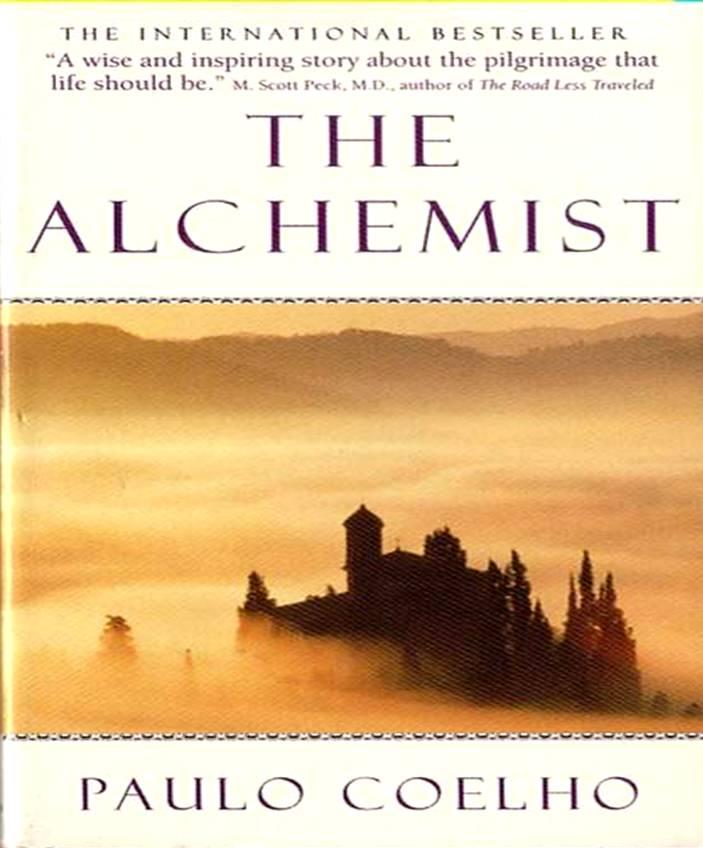
The Alchemist by Paulo Coelho


The Alchemist

Author: Paulo Coelho

Publisher: HarperCollins Publisher; 1993

Price: RM32.90

Local distributor: Kinokuniya


Some interesting abstracts:

"People from all over the world have passed through this village. They come in search of new things, but when they leave, they are basically the same people they were when they arrived. They climb the mountain to see the castle, and they wind up thinking that the past was better than now. They have blond hair, or dark skin, but basically, they're the same as the people who live right here."

"Everyone seems to have a clear idea of how other people should lead their lives, but none about his own."

At certain point in our lives, we lose control of what's happening to us, and our lives become controlled by fate. That's the world's greatest lie."

"Everybody, when they are young, knows what their personal legend is. They yearn for everything they would like to see happen to them. But as time passes, a mysterious force begins to convince them that it will be impossible for them to realise their personal legend. The mysterious force is a force that appears to be negative, but actually shows you how to realise your personal legend. It prepares your spirit and your will - It's your mission on earth. To realise it is a person's only real obligation. And, when you want something, all the universe conspires in helping you to achieve it."

"Treasure is uncovered by the force of flowing water, and it is buried by the same currents."

"Everything in life has its price. If you start out by promising what you don't even have yet, you'll lose your desire to work towards getting it."

"In order to find the treasure, you will have to follow the omens. God has prepared a path for everyone to follow. You just have to read the omens that he left for you."

"We see the world in terms of what we would like to see happen, not what actually does."

"I don't want to change anything because I don't know how to deal with change. I'm used to the way I am."

"Every blessing ignored becomes a curse."

"We made a lot of detours, but we're always heading for the same destination."

"How do you guess about your future? The secret is in the present. If you pay attention on the present, you can improve upon it. And if you improve on the present, what comes later will also be better. Forget about the future and live each day according to the teachings, confident that God loves his creation. Each day in itself brings with it an eternity. God rarely reveals the future. When He does so, it is for only one reason: It's a future that was written so as to be altered."

"You must love the desert, but never trust it completely. Because the desert tests all men; it challenges every steps, and kills those who become distracted."

"Its not what enters men's mouth that's evil. It's what comes out of their mouth that is."

"Remember that wherever your heart is, there you will find your treasure."


The Alchemist is a book that was first published in Brazil in 1988 and is the most famous work of author Paulo Coelho. It is a symbolic story that urges its readers to follow their dreams.

As of 2004, had been translated into over 40 languages and sold over 50 million copies in more than 150 countries.

The story is about a shepherd boy name Santiago who had a dream of being taken to the Egyptian pyramids. He then ventured from his homeland in Spain to North Africa in search of a treasure buried in the Pyramids. Along the way he meets a beautiful young gypsy woman and an old man named Melchizedek, and who claim to be the king of Salem. The old man requested that Santiago give him a tenth of his sheep in return he will tell him where to find the hidden treasure.

Later, he was cheated of all his sheeps by a stranger boy whom he had just befriended. He then realised that he had to choose between thinking of himself as the poor victim of a thief and as an adventurer in quest of his treasure. " I'm an adventurer, looking for treasure," he said to himself.

Santiago found a job at a crystal shop so that he can earn some money to continue in pursuit of his dream. Working for eleven months and nine days, he then decided that he had saved enough to continue his travel to Egypt.

Along the journey he meets many spiritual messengers, who come in unassuming forms such as a camel driver and a well-read Englishman. In one of the Englishman's books, Santiago first learns about the alchemists - men who believed that if a metal were heated for many years, it would free itself of all its individual properties, and what was left would be the "Soul of the World." He did eventually meet with an alchemist, and the ensuing student-teacher relationship clarifies much of the boy's misguided agenda, while also emboldening him to stay true to his dreams. "My heart is afraid that it will have to suffer," the boy confides to the alchemist one night as they look up at a moonless night.

"Tell your heart that the fear of suffering is worse than the suffering itself," the alchemist replies. "And that no heart has ever suffered when it goes in search of its dreams, because every second of the search is a second's encounter with God and with eternity."

When he finally reached the destination of his dream, the pyramid. he found nothing - no treasure. He struggled and continue digging until his hands were abraded and exhausted. As he was attempting to pull out the gravels, several tribal refugees approached him, beat him up and took all his belongings, ridiculed him and then disappeared.

Santiago stood up shakily and look once more at the pyramids and laughed because he knew where his treasure was.

He went back, to where he came from, and finally found the treasure that he was looking for; at his very own backyard.

The moral of this story speaks of the "Soul of the World" and that the Earth itself wants us to be happy. This story tells how each of us have a single mission or goal in life, a Personal Legend, though most of us don't realize it. But most importantly it speaks of how doing good deeds for others is eventually rewarded and though we don't know what our treasure will be, or where and how we will receive it, if we do follow our heart, we will find it.
Excellent presentation and worth the money. To all those who thinks the grass is greener on the other continent, they should read this book.

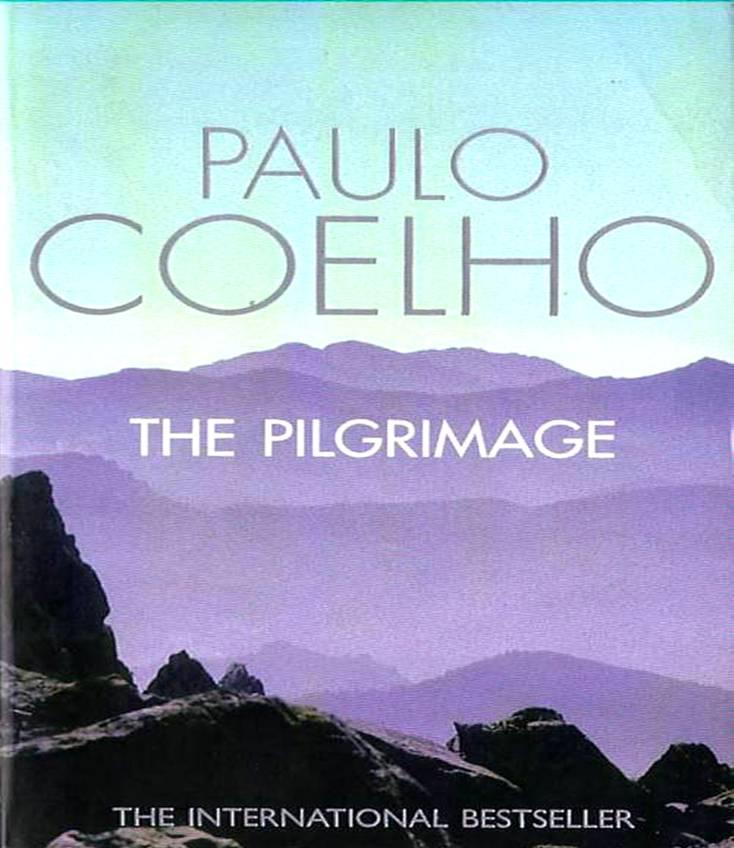
The Pilgrimage by Paulo Coelho

The Pilgrimage

Author: Paulo Coelho

Publisher: HarperCollins Publishers; 1995

Price: RM39.90

Distributor: Kinokuniya, KLCC


In 1986, Paulo Coelho sets out for The Pilgrimage towards Santiago de Compostela. "In those days' Paulo's spiritual quest was linked to the idea that there were secrets, mysterious ways, and people who are capable of understanding and controlling things, which would be unavailable to mortals. His journey gave him great insights and experience, to which Paulo was transformed as he learns to understand the nature of truth through the simplicity of life.

The Pilgrimage details Paulo Coelho's journey along the legendary road of San Tiago across Spain. In The Pilgrimage, Coelho recounts the spectacular trials that lead him to discover personal power, wisdom, and a miraculous sword that seals his initiation into the secret society of the Tradition. With his enigmatic mentor, Petrus, he follows a legendary road travelled by pilgrims of San Tiago since the Middle Ages, encountering a Chaucerian variety of mysterious guides and devilish opponents. Coelho's experiences and his mentor's teachings impart the spiritual wisdom that reveals itself as the true purpose of their exciting journey.

The story shows that love can make us stronger and it is this strength that allows us to make the right decision at the right time. The search of truth is assimilated to a personal search for meaning, for the things that we need in life such as truth, agape, enthusiasm, and spirituality.

Some interesting abstracts:

"Don't lose sight of your objective. Don't forget that you still have a great deal to learn before you find your sword."

"Almost always that people who are fascinated by details forget what they are after."

"When you are moving towards an objective, it is very important to pay attention to the road. It is the road that teaches us the best way to get there, and the road enriches us as we walk its length. You can compare it to a sexual relationship: the caresses of foreplay determine the intensity of the orgasm."

"Time isn't something that always proceeds at the same pace. It is we who determine how quickly time passes."

"Changing the way you do routine things allows a new person to grow inside you."

"Wherever your treasure is, there will be your heart."

"We must not stop dreaming. Dreaming nourishes the soul. Many times in our lives we see our dreams shattered and our desire frustrated, but we have to continue dreaming. If we don't, our soul dies, and agape cannot reach it."

"The first symptom of the process of killing our dreams is the lack of time. The busiest people always have time enough to do everything. Those who do nothing are always tired and pay no attention to what they are required to do. The second symptom is our uncertainties. Because we don't want to see life as a grand adventure, we begin to think of ourselves as wise and fair and correct in asking so little of life. We never see the delight, the immense delight in the hearts of warriors. For them, neither victory nor defeat is important; what's important is only that they are fighting the good fight. The third symptom is peace. Life becomes a sunday afternoon; we ask for nothing grand, and we cease to demand anything more than we are willing to pay. In this state, we think of ourself as mature; we put aside the fantasies of our youth, and we seek personal and professional achievement. But deep down in our hearts, we know that what has happened is that we have renounced the battle for our dreams. When we renounced our dreams and find peace, we go through a short period of tranquility. But the dead dreams begin to rot within us and to infect our entire being. We become cruel to those around us, and then we begin to direct this cruelty against ourselves. That's when illness and psychoses arise. And the dead spoit dreams make us difficult to breathe, and we actually seek death. We need to learn to fight the good fight. We need to accept adventures and challenges that life provides, but we still want to deny anything that is extraordinary. The only way to rescue our dreams is by being generous with ourselves. Any attempt to inflict self-punishment - no matter how subtle it may be - should be dealt with rigorously. In order to know when we are being cruel to ourselves, we have to transform any attmpt at causing spiritual pain - such as guilt, remorse, indecision, and cowardice - into physical pain. By transforming a spiritual pain into a physical pain, we can learn what harm it can cause us."

"We are only able to be kind to ourselves when we need severity."

"We are always trying to convert people to a belief in our own expectation. We think that the more people there are who believe as we do, the more certain it will be that what we believe is the truth. This is mistaken behavior."

"There is no religion that is capable of bringing all of the stars together, because if this happen, the universe would become a gigantic empty space, and would lose its reason for existence."

"What appears from down here to be a huge number of bodies that are similar to each other are really a million different things, spread over a space that is beyond human comprehension."

"Fans who lack faith can make a winning team lose a game."

"It appears that a newlywed do really love each other. And they believe that their love will grow. But shortly, they will be alone with each other, struggling to earn a living, build a house, and share their misadventure. For he will begin to feel that he's not free enough to express all of the eros; (the feeling of love for another) all of the love that he has for other women. She will begin to feel that she had gave up brilliant career in order to be her husband. So, instead of creating something together, each would begin to feel robbed of the means to express eros and the spirit that unites them would begin to reveal only its negative side. And what God had provided to humans as their noblest sentiment would become a source of hatred and destructiveness. Eros therefore makes us feel apart from the world, trapped in our solitude."

"Philos is love in the form of friendship. It is what we feel towards others. When the flame of eros stops burning, it is philos that keeps a couple together.

"Agape is both eros and philos. Agape is total love that consumes. The love that consumes makes everything else - absolutely everything - lose its importance. It is the love that consumes the person who experience it. Agape is much more than liking. It is a feeling that suffuses, that fills every spaces in us, and turns our aggression to dust. Whoever knows and experience agape learns that nothing else in the world is important - just love. This is the kind of love that can shook the stars and change the course of history and enables us to accomplish things that kings, armies, and empires could not."

"Enthusiasm is another form of agape Enthusiasm is agape directed at a particular idea or thing. Enthusiasm carries us toward our goal.

"We blame the world for our boredom and for our losses, and we forget that it was we ourselves who allowed this enchanting power, which justifies everything, to diminish - the manifestation of agape in the form of enthuisiasm."

"The messenger helps you, but there is one thing that is beyond the messenger's control, beyond his desires, and beyond you, as well. It is the divine spark, what we call LUCK!"

"A threat leads to nothing if it is not accepted."

"When we sense the presense of something positive, your imagination, concluded that someone had arrived to help you. And this, your faith save you even though it was based on an assumption that was absolutely false."

"When I asked if you wanted to, I was not testing your courage. I was testing your wisdom. But you wanted to be brave, when it is enough to have been intelligent. Wisom is only valuable if it helps us to overcome obstacles."

"Good teachers only are able to demonstrate how you can deal with problem, and how to win. Teaching only demonstrate what is possible. Learning is making it possible for yourself."

"Once a problem is solved, it's simplicity is amazing."

"Death is inevitable. Death is our constant companion, and it is death that gives each person's life its true meaning. Actually, we should be more frightened by the way in which we would die than by death itself."
Philosophical and eruditing. A must read!

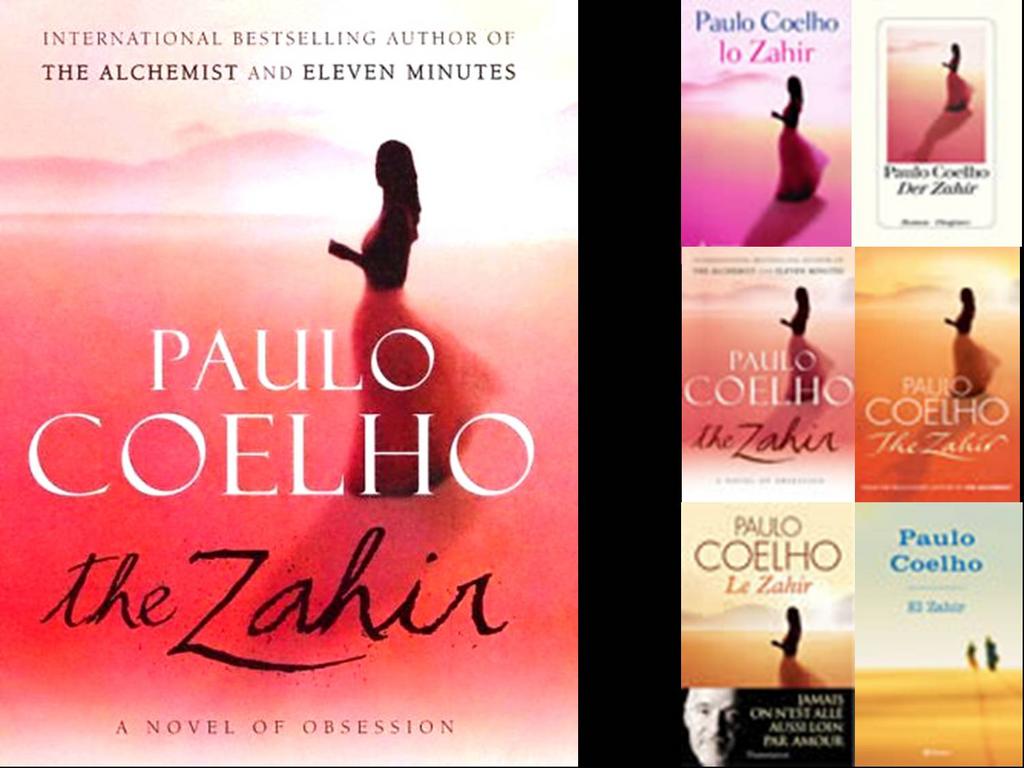
The Zahir by Paulo Coelho

The Zahir

By Paulo Coelho

HarperCollinsPublishers; 2005

RM69.90
MPH


Coelho’s latest novel 'O Zahir' reaches the Brazilian bookstores on April 2nd 2005. It is already the number one in the bestseller lists of all 83 countries in which it has been released; the only exception is in Germany, where it is number two, behind Da Vinci Code (another great novel). O Zahir was published in 83 countries and in 42 languages throughout the globe.

The story is about a renowned author who discovers that his wife, a war correspondent, has disappeared, leaving no trace. Was she kidnapped, blackmailed, or simply bored with their marriage? The unrest she causes is as strong as the attraction she exerts.

Though time brings more success and new love, he remains mystified – and increasingly fascinated – by her absence.

According to writer Jorge Luis Borges, the idea of Zahir comes from the Islamic tradition. Zahir, in Arabic means visibility, present, incapable of going unnoticed. It is someone or something which, once we have come into contact with them, gradually occupies our every thought, until we can think of nothing else.

When Coelho was young, his parent thought I was psychotic and sent him to an asylum.
Paulo Coelho has led an extreme rebellious during his youth. Coelho escaped from the asylum three times and was eventually released in 1967. He then enrolled in Law School, only to drop out to become a hippy. He also wrote popular song lyrics for some of Brazil's famous pop music stars, including Elis Regina and Raul Seixas. Shortly after, he worked as a journalist.

Before realising that writing was his "destiny", he enrolled in law school, dropped out to become a hippy, and for several years wrote lyrics for Raul Seixas, the Brazilian rock star. Then, in 1974, Coelho was arrested for "subversive" activities by the ruling militia (the authorities saw Coelho's lyrics - some of them influenced by the teaching of the satanist Aleister Crowley - as left-wing and dangerous). He was bundled into a car, taken to a secret headquarters and tortured with electric shocks to his genitals.

Coelho's books all tend to feature some sort of spiritual quest, written in accessibly pared-down language which leads the reader inexorably towards a thumping great moral climax.

His search for her – and for the truth of his own life – takes him from France to Spain, Croatia and, eventually, the bleakly beautiful landscape of Central Asia. More than that, it takes him from the safety of his world to a totally unknown path, searching for a new understanding of the nature of love and the power of destiny.

With The Zahir, Paulo Coelho demonstrates not just his powerful and captivating storytelling, but also his extraordinary insight into what it is to be a human being in a world full of possibility.

The story is basically non-fiction as it truly reflects the journey of life of Coelho himself.

My opinion: not of the same quality as Alchemist and The Pilgrimage, or even Eleven Minutes.

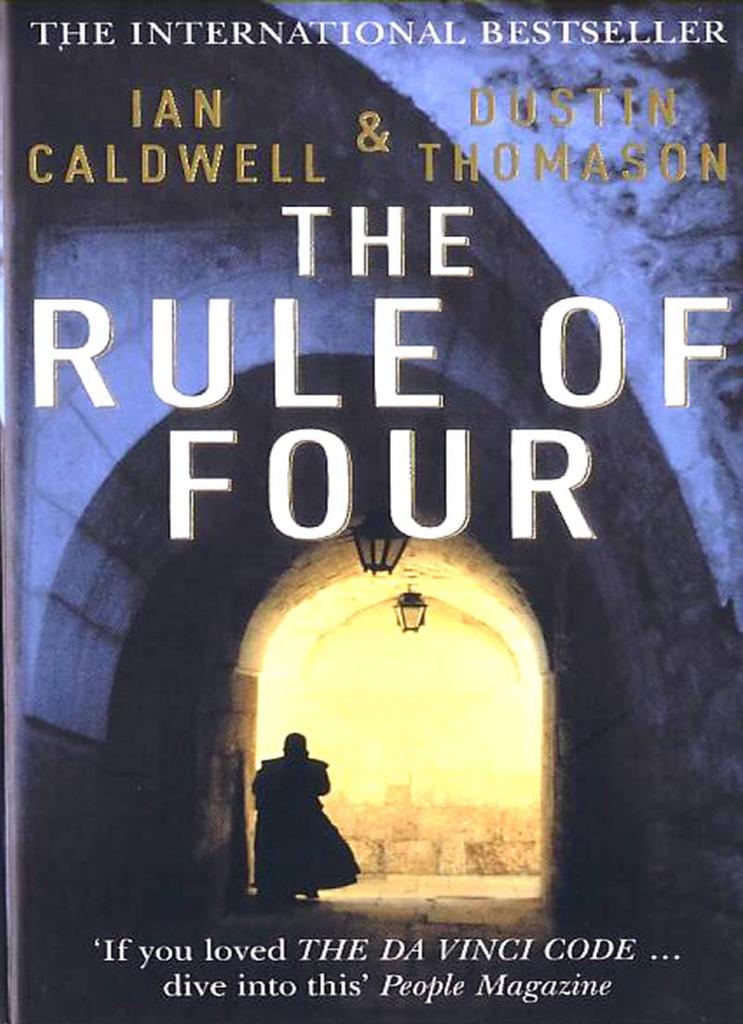
The Rule of Four

The Rule of Four

Author: Ian Caldwell & Dustin Thomason

Publisher: Arrow Books; 2004

Price: RM35.90

Local distributor: MPH


Sorry, review not ready .... please help, if you can .....